
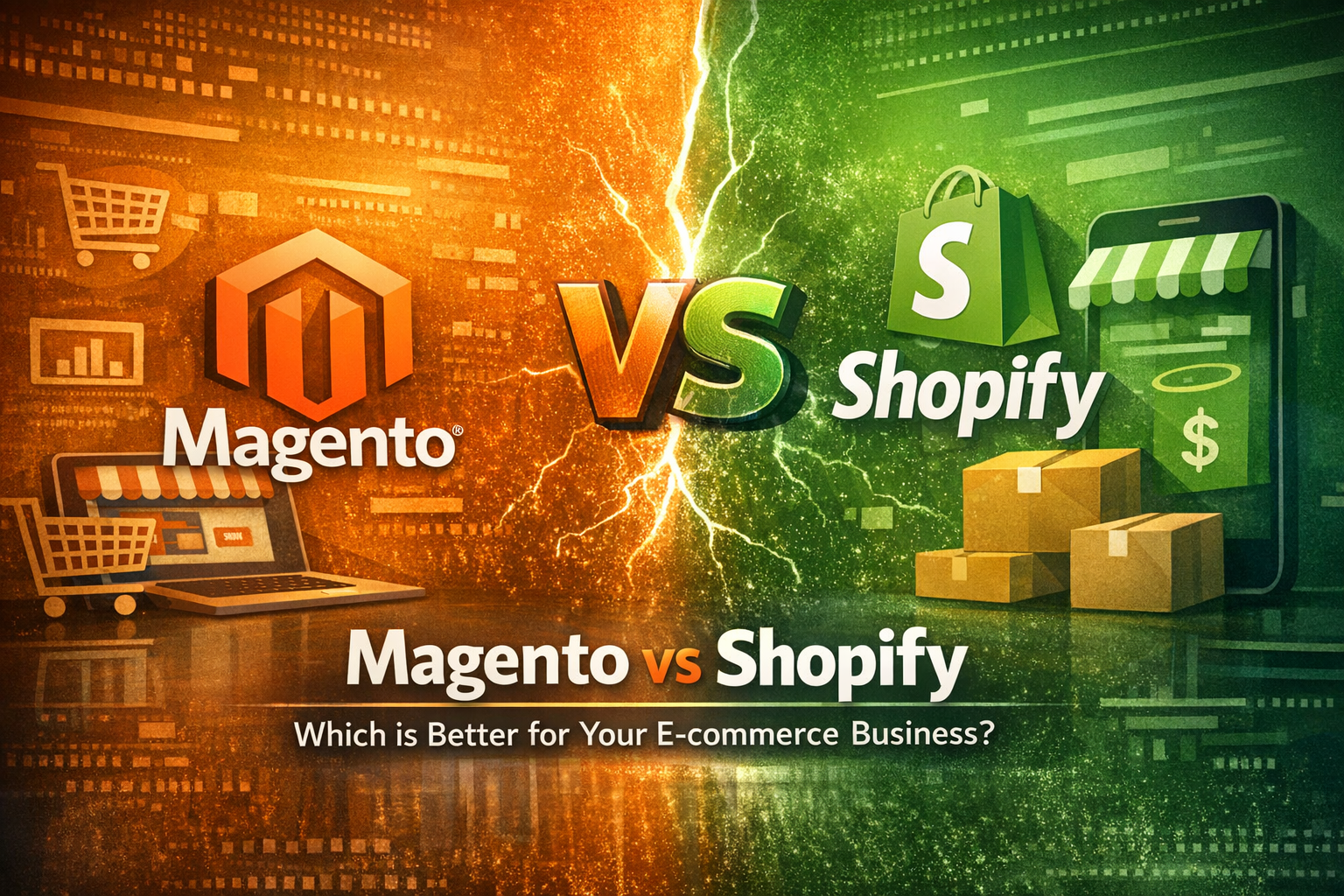
1. Overview of Magento and Shopify
Magento is an open-source e-commerce platform known for its flexibility, scalability, and extensive customization options. It is favored by medium to large businesses who want complete control over their online store.
Shopify is a fully hosted, user-friendly e-commerce solution designed to simplify store setup and maintenance. It is ideal for small to medium-sized businesses and entrepreneurs looking for a quick and reliable way to launch their store.
2. Ease of Use
Before launching your e-commerce business, consider the learning curve and setup time:
- Shopify: Designed for simplicity, Shopify offers an intuitive drag-and-drop interface, pre-built themes, and guided onboarding. Most users can set up a professional store without technical skills.
- Magento: Requires technical knowledge or developer assistance to install, configure, and maintain. The platform is powerful but can be overwhelming for beginners.
Actionable Step: If you have limited technical expertise or want to launch quickly, Shopify is the better choice. For businesses with access to developers or IT resources, Magento offers more control.
3. Customization and Flexibility
Customization options are crucial for building a unique brand experience:
- Magento: Since it is open-source, you have full access to the codebase. You can create custom features, integrate with various systems, and modify everything from product pages to checkout workflows.
- Shopify: Offers a wide range of apps and themes through its marketplace. Customization is somewhat limited to what the platform supports and the Liquid templating language.
Actionable Step: If your business requires unique features or complex integrations, Magento’s flexibility will serve you better. Shopify is suited for standard e-commerce needs with moderate customization.
4. Pricing and Costs
Understanding the cost implications of each platform helps you budget effectively:
- Shopify: Monthly subscription plans start from $39/month (Basic Shopify) and go up to $399/month (Advanced Shopify). Additional costs include transaction fees (unless using Shopify Payments) and paid apps.
- Magento: The open-source Community Edition is free to download, but you will incur costs for hosting, security, development, and maintenance. The Enterprise Edition (Adobe Commerce) can cost tens of thousands annually.
Actionable Step: For startups and small businesses, Shopify offers predictable pricing and lower upfront costs. Larger enterprises with bigger budgets may find Magento’s open-source model more cost-effective in the long run.
5. Scalability and Performance
Consider how well your platform can grow with your business:
- Magento: Highly scalable, capable of handling large product catalogs and high traffic volumes. Performance depends on your hosting environment and optimization efforts.
- Shopify: Scales easily by upgrading plans. Shopify’s cloud infrastructure handles security, performance, and uptime, but very large or complex stores may encounter limitations.
Actionable Step: If you anticipate rapid growth or need enterprise-level performance, Magento is a strong candidate. Shopify works well for scaling up to medium-sized operations without technical overhead.
6. Security and Maintenance
Security is essential to protect customer data and maintain trust:
- Shopify: Fully hosted and PCI DSS compliant. Shopify manages all updates, backups, and security patches, reducing your maintenance burden.
- Magento: Requires you to manage your own security, updates, and backups. This demands technical expertise and can be resource-intensive.
Actionable Step: If you want a hands-off security approach, Shopify is preferable. Magento demands a dedicated team or external support to keep your store secure.
7. Marketing and SEO Capabilities
Driving traffic and conversions depends on your platform’s marketing tools:
- Magento: Offers extensive SEO customization options, advanced marketing tools, and integrations with third-party marketing platforms.
- Shopify: Provides built-in SEO features and numerous marketing apps. It simplifies promotions like discount codes, email marketing, and social media integration.
Actionable Step: Both platforms support strong marketing strategies. Choose Magento if you want deep SEO control and advanced marketing automation; Shopify works well for straightforward marketing needs.
Frequently Asked Questions (FAQ)
Q1: Which platform is easier for beginners?
Shopify is designed for beginners with no coding experience and offers a simpler setup and maintenance process.
Q2: Can I migrate from Shopify to Magento or vice versa?
Yes, migration is possible with third-party tools or professional services, but it requires careful planning to avoid data loss.
Q3: Which platform supports multi-store or multi-language features better?
Magento has robust multi-store and multi-language capabilities built-in, while Shopify supports multiple languages through apps and Shopify Plus plans.
Q4: Does Shopify charge transaction fees?
Shopify charges transaction fees unless you use Shopify Payments as your payment gateway.
Q5: Is Magento suitable for small businesses?
Magento can be used by small businesses but may be costly and complex without developer support. Shopify is typically a better fit for small businesses.
Conclusion: Which Platform Should You Choose?
Both Magento and Shopify are powerful e-commerce platforms with distinct advantages. Your decision should be based on your business size, technical expertise, budget, and growth ambitions.
- Choose Shopify if: You want an easy-to-use, all-in-one hosted solution, quick setup, predictable costs, and minimal technical maintenance.
- Choose Magento if: You need extensive customization, full control over your store, robust scalability, and have the resources to manage technical aspects.
By carefully evaluating your specific needs and resources, you can select the platform that aligns best with your e-commerce goals and sets your business up for success.


Leave A Comment