
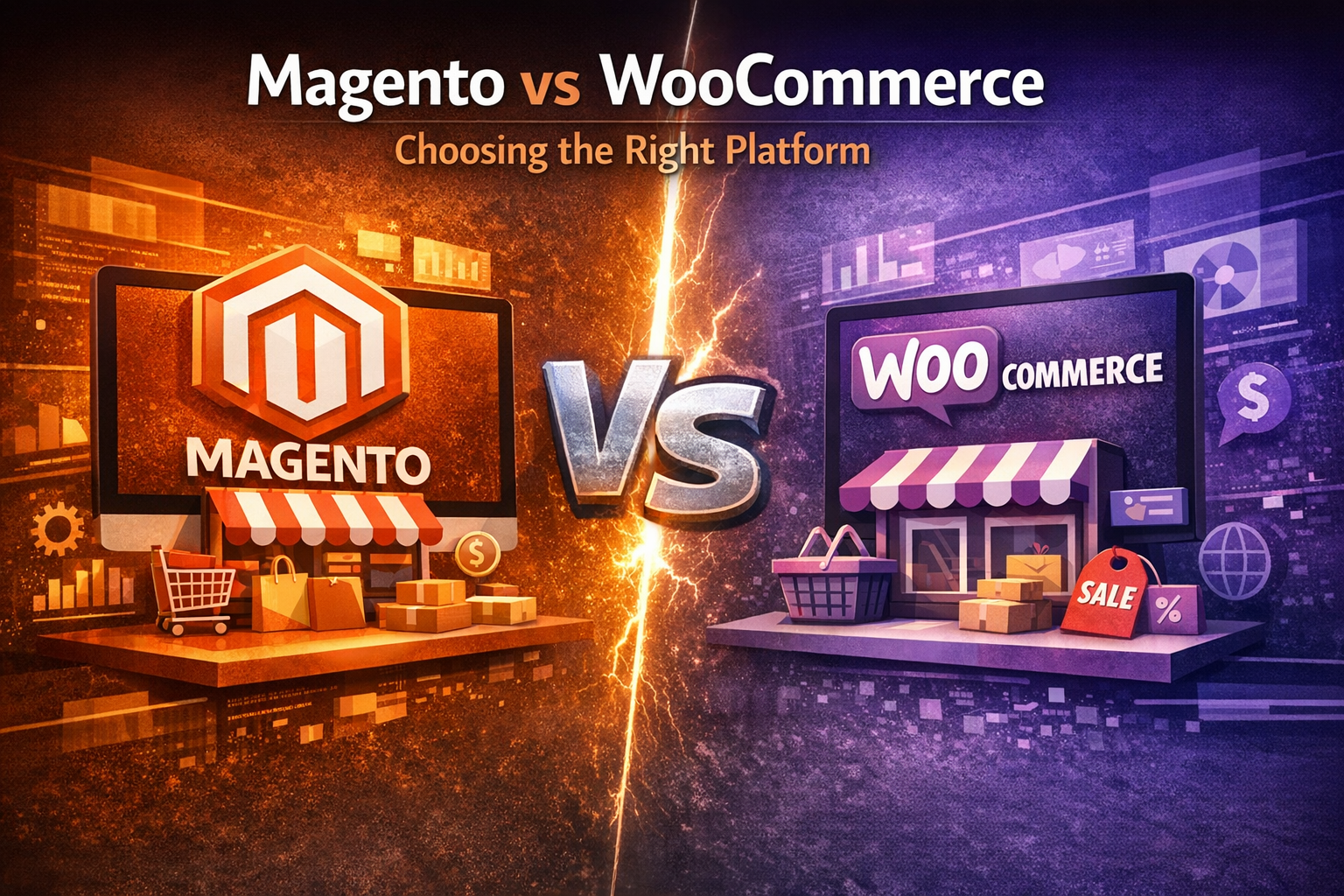
In this article, we’ll compare Magento and WooCommerce across various parameters to help you make an informed decision and choose the best platform for your online store.
1. Overview of Magento and WooCommerce
Magento
Magento is an open-source eCommerce platform owned by Adobe, known for its powerful features and scalability. It is ideal for medium to large businesses with complex needs and a development team to manage it.
WooCommerce
WooCommerce is a free WordPress plugin that transforms a WordPress site into a fully functional eCommerce store. It is highly popular among small to medium-sized businesses due to its ease of use and extensive customization options.
2. Ease of Use and Setup
Choosing a platform that matches your technical expertise and resources is essential.
- Magento: Requires technical knowledge for installation, setup, and management. Typically needs a developer or a technical team to operate.
- WooCommerce: Easy to install and set up for anyone familiar with WordPress. Minimal technical knowledge is needed, making it accessible for beginners.
3. Features and Flexibility
Both Magento and WooCommerce offer extensive features, but their approaches differ.
- Magento:
- Advanced product management including complex product types
- Built-in SEO and marketing tools
- Multi-store and multi-language support
- Detailed reporting and analytics
- Robust security features
- WooCommerce:
- Highly customizable with thousands of WordPress themes and plugins
- Supports simple and variable products
- Strong blogging and content marketing capabilities
- Wide range of payment gateways and shipping options
- Large community support
4. Performance and Scalability
Performance can directly impact user experience and sales conversions.
- Magento: Designed for high traffic and large product catalogs. It scales well with the right hosting and optimization but can be resource-intensive.
- WooCommerce: Best suited for stores with smaller catalogs and moderate traffic. Performance depends heavily on WordPress hosting and optimization practices.
5. Cost Considerations
Budget plays a significant role in choosing an eCommerce platform.
- Magento:
- Magento Open Source is free but requires paid hosting and development costs.
- Magento Commerce (Enterprise) is a premium solution with high licensing fees.
- Ongoing maintenance and developer expenses can add up.
- WooCommerce:
- Free core plugin with optional paid extensions.
- Costs include hosting, domain, and potential premium themes/plugins.
- Generally more cost-effective for startups and small businesses.
6. Security and Support
- Magento:
- Enterprise-grade security features and regular patches.
- Official support available for Magento Commerce customers.
- Strong developer community for Open Source users.
- WooCommerce:
- Security depends on WordPress core, plugins, and hosting security.
- Community support is vast, but official WooCommerce support is limited to paid plans.
- Requires proactive management to maintain security.
7. Which Platform is Right for You? Actionable Steps to Decide
To determine the best platform for your eCommerce store, follow these steps:
- Assess Your Business Size and Growth Plans: If you have a large catalog or expect rapid growth, Magento might be a better fit. For smaller stores, WooCommerce is often sufficient.
- Evaluate Your Technical Resources: Magento requires technical expertise. If you lack developers, WooCommerce is more user-friendly.
- Consider Your Budget: Calculate hosting, development, and maintenance costs for both platforms to find what fits your budget.
- Identify Desired Features: List must-have features and check which platform supports them natively or through extensions.
- Test Both Platforms: Try demo versions or set up trial stores to get a feel of each platform’s interface and functionality.
- Check Hosting Requirements: Ensure your hosting provider supports the platform you choose and offers good performance.
- Plan for Future Needs: Choose a platform that can scale or adapt as your business evolves.
Frequently Asked Questions (FAQ)
Q1: Is Magento better than WooCommerce?
Magento is better suited for larger businesses with complex needs and resources for development, while WooCommerce is ideal for smaller stores or those already using WordPress.
Q2: Can WooCommerce handle large product catalogs?
WooCommerce can manage moderate product catalogs but might require optimization and strong hosting for very large inventories.
Q3: Which platform is more SEO-friendly?
Both platforms offer good SEO capabilities. WooCommerce benefits from WordPress’s content management, while Magento offers advanced built-in SEO tools.
Q4: Do I need a developer to use Magento?
Yes, Magento typically requires technical expertise to install, customize, and maintain.
Q5: Can I switch from WooCommerce to Magento later?
Yes, but migrating platforms can be complex and may require professional assistance to transfer data and redesign the store.
Conclusion
Choosing between Magento and WooCommerce depends largely on your business size, technical expertise, budget, and long-term goals. Magento offers a powerful, scalable solution ideal for enterprises, whereas WooCommerce provides a flexible, cost-effective platform perfect for startups and small businesses.
By carefully assessing your needs and following the actionable steps outlined above, you can select the eCommerce platform that will best support your online store’s growth and success.



Leave A Comment